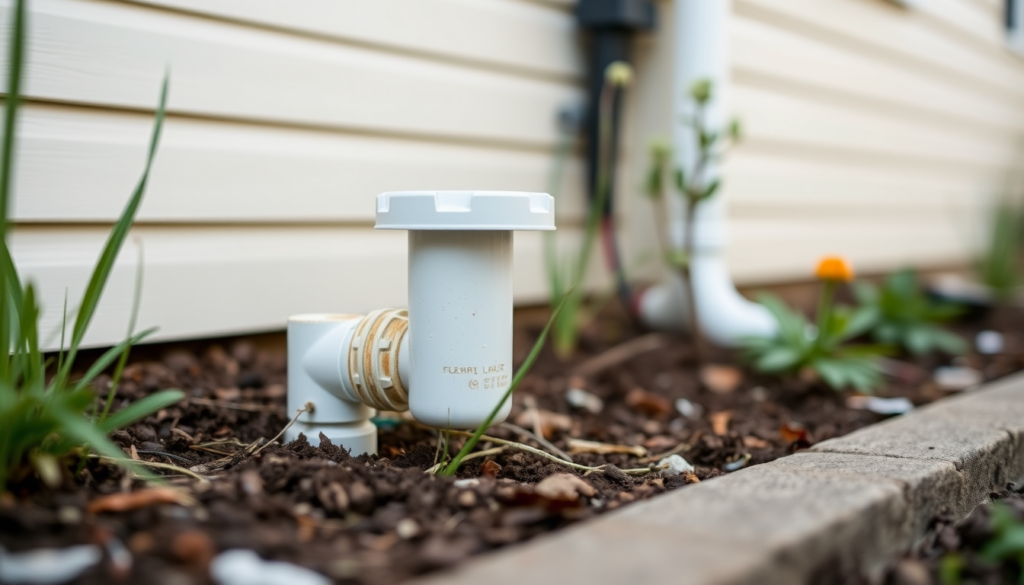
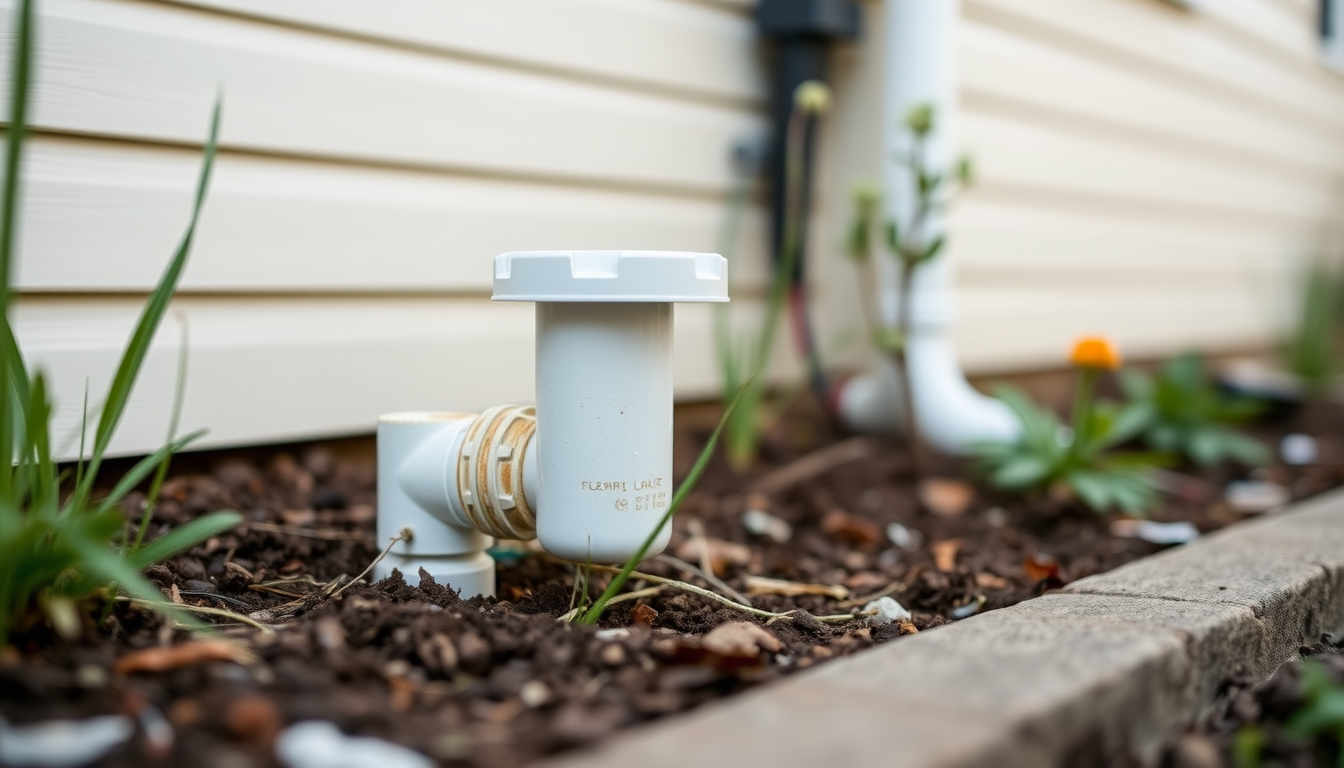
What is a sewer cleanout? It’s a capped pipe that opens straight into your sewer line, and it’s the door a drain tech uses to get a cable, a jetter hose, or a camera into that pipe without pulling a toilet or digging up your yard. On a 4 inch line, the California Plumbing Code sets the minimum cleanout fitting at 3 1/2 inches (2022 California Plumbing Code, Table 707.1). Here’s the part nobody mentions: having one isn’t enough. It has to be findable, and it has to be reachable.
Key takeaways:
- It’s an access point, not a drain. Code puts it where the building drain meets the building sewer, extended up to grade (2022 CPC 719.1).
- Access is the whole point. Code says cleanouts shall be “above grade, readily accessible” (2022 CPC 707.8). One buried under sod or a patio pour fails that test.
- No cleanout means a harder job. The tech pulls a toilet or works off a roof vent. Both limit cable size and reach.
- Older Sonoma County homes are likeliest to be missing one. Sonoma Water estimates two-thirds of Sonoma Valley laterals are at least 30 years old, and USDA Forest Service researchers report roots cause more than half of all sewer blockages.
What is a sewer cleanout, exactly?
A sewer cleanout is a short branch off your sewer line that runs up to ground level and ends in a threaded plug. The California Plumbing Code puts it at a specific spot: “Cleanouts shall be placed inside the building near the connection between the building drain and the building sewer or installed outside the building at the lower end of the building drain and extended to grade” (2022 CPC 719.1).
Two terms are worth knowing, because plumbers use them differently than homeowners do. The building drain is the horizontal pipe under the house that collects every fixture. The building sewer, usually called the lateral, runs from there to the city main or septic tank. Your cleanout sits at the seam between them, which is exactly where a tech wants to start.
Where is your sewer cleanout?
Look for a capped pipe at ground level, usually inside a small round or rectangular box. Code requires building sewer cleanouts to be “extended to grade” (2022 CPC 719.3), and any under concrete or asphalt must stay reachable through a yard box or sit flush with the paving (2022 CPC 719.5).
- Start on the side of the house closest to your bathrooms and walk the foundation line.
- Look for a capped pipe at grade with a raised square head, often in a green or black box.
- Trace the shortest straight path from there toward the street, then check again near the curb.
- Nothing outside? Move indoors to the garage floor, the laundry wall, and the crawl space.
Outside, between the house and the street
The plug will be plastic or cast iron. In Santa Rosa there’s frequently a second one near the curb, and the City is direct about why: “a sewer cleanout gives the City (at their discretion) the option to access the lateral” between that point and the main (City of Santa Rosa, Water FAQ).
Inside, in a garage, crawl space, or utility area
Not every house has an outdoor cleanout. Older homes on raised foundations often put it inside instead, which code allows. In a crawl space, follow the largest pipe, the one everything else feeds into, toward the exterior wall. That’s your building drain, and the cleanout sits at its low end.
Why does sewer cleanout access matter more than just having one?
Sewer cleanout access is a code requirement, not a nice-to-have. The California Plumbing Code states each cleanout “shall be above grade, readily accessible, and so located as to serve the purpose for which it is intended” (2022 CPC 707.8). It also sets working room: cleanouts on piping larger than 2 inches need at least 24 inches by 24 inches of clearance in front (2022 CPC 707.9). That clearance is what lets a tech line up a cable or jetter hose straight into the pipe.
Most of the ones we find have lost that access. The usual suspects:
- Sod or mulch grown over the box after a few seasons of landscaping.
- A deck, patio slab, or paver walkway laid over it with no yard box left in place.
- A raised planter, shed corner, or row of shrubs killing the working clearance.
- A cap painted over, rusted solid, or cracked and packed with dirt.
- Regrading from a remodel that dropped the box below the new soil line.
Does a buried one still count? Functionally, no. If we can’t open it, the job reverts to the same options a house with no access point has. So the highest-value plumbing maintenance most homeowners will ever do costs nothing: find yours this weekend, clear a two foot circle around it, and photograph it with a landmark in frame.
What does a reachable cleanout change about the drain call?
It lets a tech put full-size equipment into the sewer line at the right point, pointed the right way. Code requires each cleanout to open “to allow cleaning in the direction of flow of the soil or waste or at right angles thereto” (2022 CPC 707.5), which is why a proper one aims a cable downstream toward the blockage instead of fighting the pipe’s geometry. Three things get easier the moment the cap comes off.
Cabling. A sectional or drum machine runs a larger cutter head from a cleanout than from a toilet flange or a vent. Bigger head, more pipe wall actually gets scraped. Our drain cleaning page covers how that works on a main line.
Hydro jetting. A jetter hose needs a straight, controlled entry. From a cleanout that’s routine. From a roof vent it’s awkward and often not worth attempting. Hydro jetting strips grease and root hair off the pipe wall instead of punching a hole through it.
Camera and locating. This is the big one. A cleanout is where a sewer camera inspection starts. The camera tells you whether you’ve got a soft blockage, a root mass, a belly, or a broken pipe, and the locator marks the spot so any digging is a small hole instead of a trench across the yard.
Side by side, here’s what that cap buys you on a main line call:
| On the job | Reachable cleanout | No cleanout, or a buried one |
|---|---|---|
| Entry point | Cap off at grade, straight shot into the lateral | Pull a toilet or set a ladder to a roof vent |
| Cable size | Full-size cutter head | Limited by the flange or vent diameter |
| Hydro jetting | Routine | Awkward, often not attempted |
| Camera inspection | Starts in minutes | Harder to run, sometimes not possible |
| Fixture handling | Nothing removed | Toilet pulled, wax ring reset |
What if your home doesn’t have a sewer cleanout?
Plenty of older homes here don’t, and it isn’t a violation on a house built before the requirement applied. Sonoma Water estimates two-thirds of the sewer laterals in Sonoma Valley are at least 30 years old, and notes they “can be compromised by tree root intrusions, grease buildup, pipe cracks, and pipe sags” (Sonoma Water, Private Sewer Laterals). A clay or cast iron lateral with no access point is what turns a routine drain call into a bigger project.
Adding one is a defined job, not a mystery. A tech locates the lateral, digs a small hole over it, cuts in a wye fitting, runs a riser to the surface, and sets a yard box so the cap sits flush (2022 CPC 719.3 and 719.5). If it lands near the street, Santa Rosa requires an Encroachment Permit and construction to City Standards 513/513A, since that’s public right of way (City of Santa Rosa, Water FAQ).
The cheapest time to add one is when the line is already open. Having sewer repair done? Ask while the trench is there. Buying an older home here? Have the inspection confirm usable access exists, not just that the line drains. Sonoma Valley’s district ordinance already requires laterals on properties 30 years or older to be inspected and repaired if needed, following NASSCO Lateral Assessment and Certification Program standards (Sonoma Water, Sonoma Valley Private Sewer Laterals).
How do you take care of a sewer cleanout?
Keep it visible and keep the cap intact. That’s most of it. Here’s the honest split between what a homeowner can handle and what waits for a tech.
Do this yourself. Keep the box clear of soil, sod, and mulch, and keep roughly two feet around it free of planters and stored gear so the code clearance stays real. Replace a cracked or missing cap, because an open one lets dirt and rodents in and sewer gas out.
Don’t do this. Never unscrew the cap on a line that’s actively backed up. If the lateral is full and standing, that plug is the only thing holding several feet of sewage in the pipe, and it will come out at your feet. Skip the chemical drain cleaner too. It sits on top of a main-line blockage, does nothing to roots, and makes the pipe hazardous for whoever opens it next.
Roots deserve their own note in this county. USDA Forest Service researchers report roots “are reported to cause >50% of all sewer blockages” (USDA Forest Service, Tree root intrusion in sewer systems). On a clay lateral with a joint every few feet and a mature oak in the yard, that’s not a statistic, it’s a schedule.
When it’s worth calling
Call when more than one fixture is slow or backing up at once, when the lowest drains gurgle as you run water upstairs, or when you’ve found your cleanout and it’s weeping or overflowing. That last one is the line telling you the blockage is downstream of the house, and the cleanout is doing its secondary job: relieving pressure outside instead of inside.
Worth knowing before you call anyone: in Santa Rosa, the lateral is yours. The City states the property owner is responsible for maintaining the line from the City sewer main to the structure it serves (City of Santa Rosa, Water FAQ). A backup in that pipe is a homeowner repair, not a utility callout. That’s exactly why accessible entry is worth having before you need it.
If that’s what you’re looking at right now in Santa Rosa, Rohnert Park, Petaluma, Sebastopol, or anywhere else in Sonoma or Marin County, call Rock Solid Drains at (707) 889-8191. We’re licensed in California under CSLB #1065909. We’ll open the cleanout, put a camera in the line, and tell you what’s in there before anything gets dug. See what neighbors say on our reviews page, or reach us here.
Frequently Asked Questions
How do I know if I have a sewer cleanout?
Walk the side of the house nearest your bathrooms and look for a capped pipe at ground level, often in a small plastic box. Check near the curb too, then the garage floor, laundry wall, and crawl space. Code requires building sewer cleanouts to be extended to grade (2022 CPC 719.3), so a properly installed one sits at the surface.
Can I open the sewer cleanout myself?
Yes, as long as the line isn’t currently backed up. Use a pipe wrench on the raised square head and turn slowly. If you see or hear standing water behind the plug, stop and leave it closed. A full lateral empties at your feet the moment the cap clears the threads, and sewage exposure is a health issue, not just a mess.
What does a two-way cleanout do that a regular one doesn’t?
It lets a tech run equipment both directions from a single opening, toward the house and toward the street. The California Plumbing Code permits “an approved type of two-way cleanout fitting,” installed inside the building wall near the building drain and building sewer connection or outside at the lower end of the building drain extended to grade, to substitute for an upper terminal cleanout (2022 CPC 707.4, Exception 4).
How many cleanouts should a house have?
At minimum, one where the building drain meets the building sewer. Past that it depends on the run. Code requires additional building sewer cleanouts at intervals not exceeding 100 feet in straight runs, plus one for each aggregate horizontal change in direction exceeding 135 degrees (2022 CPC 719.1). A long lot with a doglegged lateral can need two or three.
Does a missing cleanout matter when I’m buying an older home here?
Enough to check before you close. No cleanout means every future drain call starts by pulling a toilet or setting a ladder, and it makes a camera inspection harder to run. Sonoma Water reports two-thirds of Sonoma Valley laterals are at least 30 years old, so on a home in that range, ask for a sewer scope and confirm there’s usable access.