Here’s the short answer on hydro jetting vs snaking: snaking is the right tool for a single, soft, one-time clog, while hydro jetting is what actually cleans the whole pipe when grease, scale, or roots keep bringing the clog back. A snake (we call it cabling) punches a channel through the blockage so water moves again. Hydro jetting uses high-pressure water to scour the entire pipe wall, not just the center. So the real question isn’t which one is “better.” It’s which one your pipe needs right now, and that depends on what’s actually inside it. Here’s how a Sonoma County drain tech sorts that out.
Key takeaways:
- Snaking clears a path through one clog. Hydro jetting cleans the full pipe wall and restores close to the original diameter.
- Use snaking for a single slow fixture or a one-off blockage like hair or a flushed object.
- Use a hydro jetting service for recurring clogs, grease buildup, scale, or roots, especially when the same drain backs up again and again.
- On older clay or cast iron pipe, a camera inspection should come before jetting to confirm the pipe can take the pressure.
- If two or more fixtures back up at once, stop running water and call a pro before it overflows into the house.
Snaking vs Hydro Jetting in One Look
The core difference is coverage. Drain snaking (cabling) pushes a steel cable through a clog to open a single channel, so it clears the blockage but leaves the buildup on the pipe wall. Hydro jetting sends high-pressure water down the line to scour the entire pipe wall and flush it back toward its original inside diameter. Put simply, snaking fixes a clog, while jetting cleans the pipe. The table below is the quick version of when each one fits, and the rest of the article explains why.
| Drain snaking (cabling) | Hydro jetting | |
|---|---|---|
| What it does | Pushes a rotating steel cable through the clog to open a channel | Runs a high-pressure water hose down the line to scour the full pipe wall |
| Best for | One slow fixture, a single soft clog, hair, a flushed object | Grease, soap scum, mineral scale, root hairs, recurring clogs |
| What it leaves behind | The coating on the pipe wall, plus any belly, roots, or crack underneath | Very little, it cleans the pipe back toward its full diameter |
| What it won’t fix | Buildup, recurring clogs, a damaged pipe | A cracked, collapsed, or bellied pipe (that needs repair) |
| Caution | Can bypass roots clinging to the pipe wall | Check fragile clay or corroded cast iron with a camera first |
What Does Drain Snaking Actually Do?
Snaking clears a channel, and that’s all it’s built to do. A drain snake, or cable, is a long flexible steel line with a cutting or grabbing head on the end. You feed it down the drain, it spins, and the head bores through the soft center of the clog or hooks an object and pulls it back. Water starts moving, the drain looks fixed, and for a true one-off, it is.
The catch is what the cable doesn’t do. It doesn’t clean the pipe wall, and it doesn’t repair anything. When the clog is grease in a kitchen line or a hair-and-soap mat in a bathroom, the cable punches through the middle and leaves the coating stuck to the sides. That residue grabs the next round of food scraps or hair, and within days or weeks you’re slow again. Roots are worse. A cable often shears the roots in the center of the line but bypasses the ones clinging to the pipe wall. That leaves the skeleton of the root mass in place to catch debris and regrow. Ever wonder why the same drain clogs three times in a year no matter who you call? That’s usually why.
When snaking is the right call
For a single slow fixture with a soft, local clog, cabling is the correct and cheaper tool. A bathroom sink stopped up with hair, a tub draining slow, a toilet holding back on too much paper, or a kid’s toy in the trap. One fixture, one clog, no history of it coming back. Clear it and you’re done. There’s no reason to bring a jetter to a job a hand auger handles.
What Does Hydro Jetting Actually Do?
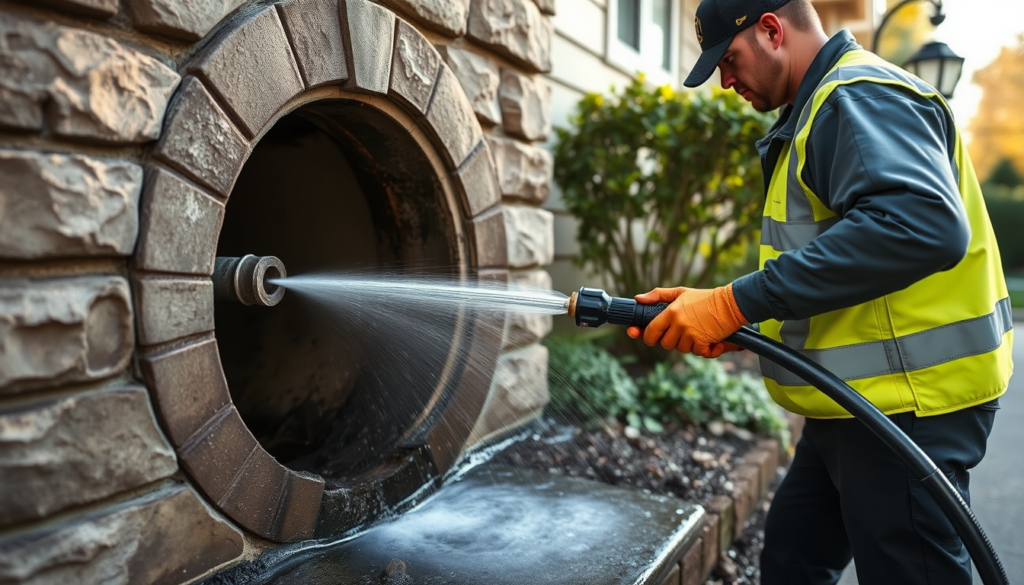
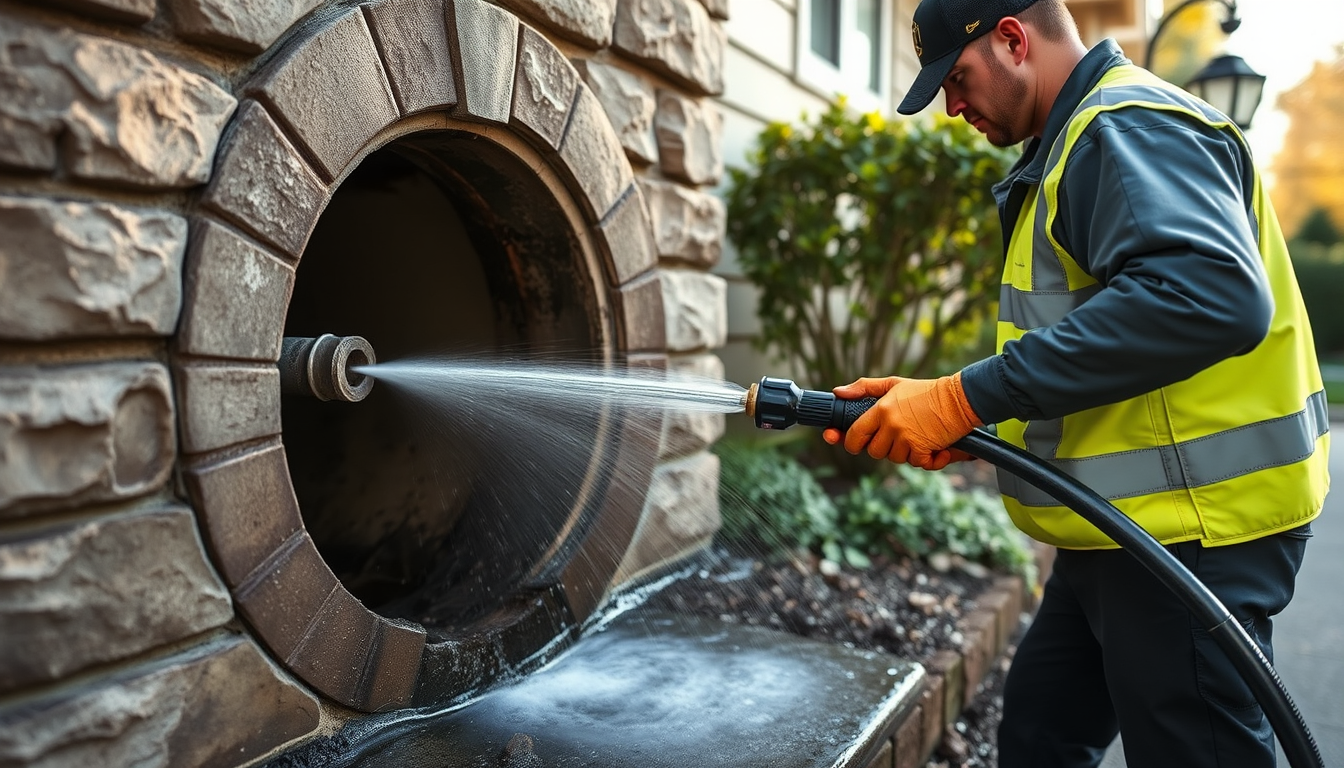
Hydro jetting cleans the entire pipe, which is the part snaking skips. A jetter sends water down the line through a specialized nozzle at high pressure. The stream scours grease, soap, mineral scale, and root hairs off the full circumference of the pipe wall, then flushes the debris out the line. Instead of a hole through the middle of the clog, you get a pipe washed back toward its original inside diameter. For grease and recurring buildup, that’s the difference between punching through and actually cleaning out.
This is also the method that holds up against roots and scale. High-pressure water can cut through the root mass and clear it off the pipe wall, not just the center, which is why jetted lines tend to stay clear longer than cabled ones. One important honest note: jetting clears roots, but it does not seal the crack or joint they came in through. If roots are entering a broken pipe, they’ll come back until the pipe itself is addressed, and that’s a job for a camera and a repair plan, not just another cleaning.
When a hydro jetting service is worth it
A hydro jetting service earns its keep when the problem is buildup or a shared line, not a single object. Call for it when the same drain keeps clogging after snaking, when a kitchen line is choked with years of grease, when multiple fixtures are draining slow at once, or when a camera has found scale or roots coating the pipe. If you’re paying someone to cable the same line every few months, you’re treating the symptom. Jetting resets the pipe in one visit so there’s nothing left for new debris to grab.
How Do You Tell Which One You Need?
The fastest clue is how many fixtures are affected. One slow sink, tub, or toilet usually means a local clog in that fixture’s branch line, often within snaking reach. Several drains slowing or backing up at the same time, especially the lowest ones in the house, points to the main sewer lateral they all share. That one observation tells you roughly where the clog lives, and a shared-line problem is far more likely to need jetting and a camera than a quick cable.
There’s a simple test you can run before anyone arrives. Watch the lowest drains when you use water elsewhere. If you flush a toilet and the shower or a floor-level drain gurgles, or the toilet level rises when the washing machine drains, water is hitting a blockage in the main line and looking for another way out. The other big signal is history. A drain that clogs once is a clog. A drain that clogs over and over is a pipe problem, and that’s the line between reaching for a snake and reaching for a jetter or a camera.
Why Does the Camera Come First in Older Sonoma County Homes?
On older pipe, the smart move is to look before you jet. A lot of homes around Sonoma County and Marin were built before the 1970s, and their sewer laterals are clay tile, cast iron, or in some cases Orangeburg. Clay comes in short sections with a joint every few feet, and every joint is a door for roots. The U.S. Forest Service reports that roots cause more than half of all sewer blockages (USDA Forest Service), and in older neighborhoods with big established trees, that’s exactly what we find. Cast iron corrodes from the inside into a rough, scaly surface that snags debris and chokes the line down. As a licensed Sonoma County contractor (CSLB #1065909), we run a camera on these older laterals every week, and the pipe almost always tells a different story than the clog does.
That’s why a camera inspection belongs before any aggressive cleaning on an old line. Jetting is safe and effective in sound pipe, but pushing high pressure through a cracked clay section or a badly corroded cast iron line can make a bad situation worse. We feed a waterproof camera down the line first and watch for the real cause: roots at a joint, a belly holding water, scale, or a cracked section. If the camera shows damage, jetting alone won’t hold, and the fix is sewer repair, sometimes a trenchless option like pipe bursting or cured-in-place lining. Buying an older home here? This is exactly what a sewer-scope inspection is for, before you close, so a hidden lateral problem doesn’t become your problem on day one.
What You Can Do Yourself vs. When to Call
Plenty of clogs are fair game for a homeowner, and we’d rather tell you the truth than sell you a visit you don’t need. For a single slow fixture, try this first: pull the pop-up or strainer and clear the hair, plunge the drain, or clean the P-trap under the sink with a bucket underneath. A hand auger on one stubborn bathroom or kitchen drain is reasonable too. Skip the chemical drain openers. They rarely clear a real clog, they can damage older clay and cast iron pipes, and they create a burn hazard for you and for whoever opens the line next.
Here’s where to stop and call. If two or more fixtures back up at the same time, if a toilet gurgles when you run another drain, if you see sewage rising in a tub or floor drain, or if the same drain keeps clogging no matter what you do, the problem is in a shared line or in the pipe itself. That’s the situation where professional drain cleaning, a hydro jetting visit, or a camera makes sense instead of another snake. If that pattern sounds like yours, Rock Solid Drains works throughout Sonoma County and Marin, and you can reach us at (707) 889-8191 to get it diagnosed properly. You can read what local homeowners say about that approach on our reviews page.
Frequently Asked Questions
Is hydro jetting better than snaking?
Neither is better overall, they’re built for different jobs. Snaking is the right tool for a single, soft, one-time clog like hair in a bathroom sink, and it’s gentler on fragile pipe. Hydro jetting is better for recurring clogs, grease, scale, and roots because it scours the full pipe wall instead of punching a hole through the center. If the same drain keeps clogging after you snake it, that’s the sign jetting (and probably a camera) is the smarter call.
Will hydro jetting damage old pipes?
It can, if the pipe is already failing and nobody looked first. Hydro jetting is safe in structurally sound pipe, but high pressure can worsen a cracked clay section or a badly corroded cast iron line. That’s why we run a camera inspection before jetting an older lateral. The camera confirms the pipe can take the pressure, and if it finds a break, the fix is a repair, not a cleaning.
Will hydro jetting get rid of tree roots for good?
It clears them thoroughly, but “for good” depends on the pipe. Jetting cuts and flushes the root mass off the pipe wall, which a cable often can’t fully do. Roots enter through a crack or an open joint, though, and until that entry point is repaired, they can grow back. The U.S. Forest Service reports that roots cause more than half of all sewer blockages (USDA Forest Service), so on a root-prone older line, a camera and a repair plan are what actually stop the cycle.
Why does my kitchen drain keep clogging even after snaking?
Because grease coats the pipe wall, and a snake only clears the center. The U.S. Environmental Protection Agency reports that grease from homes, restaurants, and industry is the most common cause, at 47 percent, of reported sewer blockages (EPA, via Clemson HGIC). Cabling punches through the grease, but the film stays stuck to the sides and catches the next round of food. Hydro jetting washes that film off the full pipe wall, which is why it holds up far better on a greasy kitchen line.
Can I just keep snaking instead of paying for hydro jetting?
You can for a true one-off clog, but not for a recurring one. If a line clogs once from a soft blockage, cabling clears it and you’re done. If you’re snaking the same drain every few months, you’re paying to treat the symptom while the buildup, roots, or damage stays in the pipe. At that point a single jetting (or a repair, if the camera finds a break) usually costs less over time than cabling the same line on repeat.