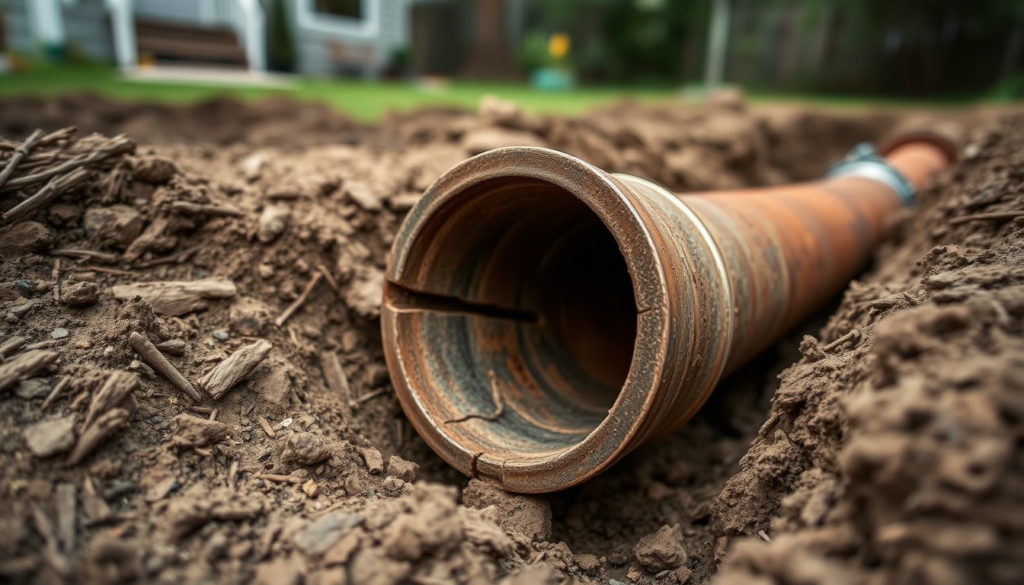
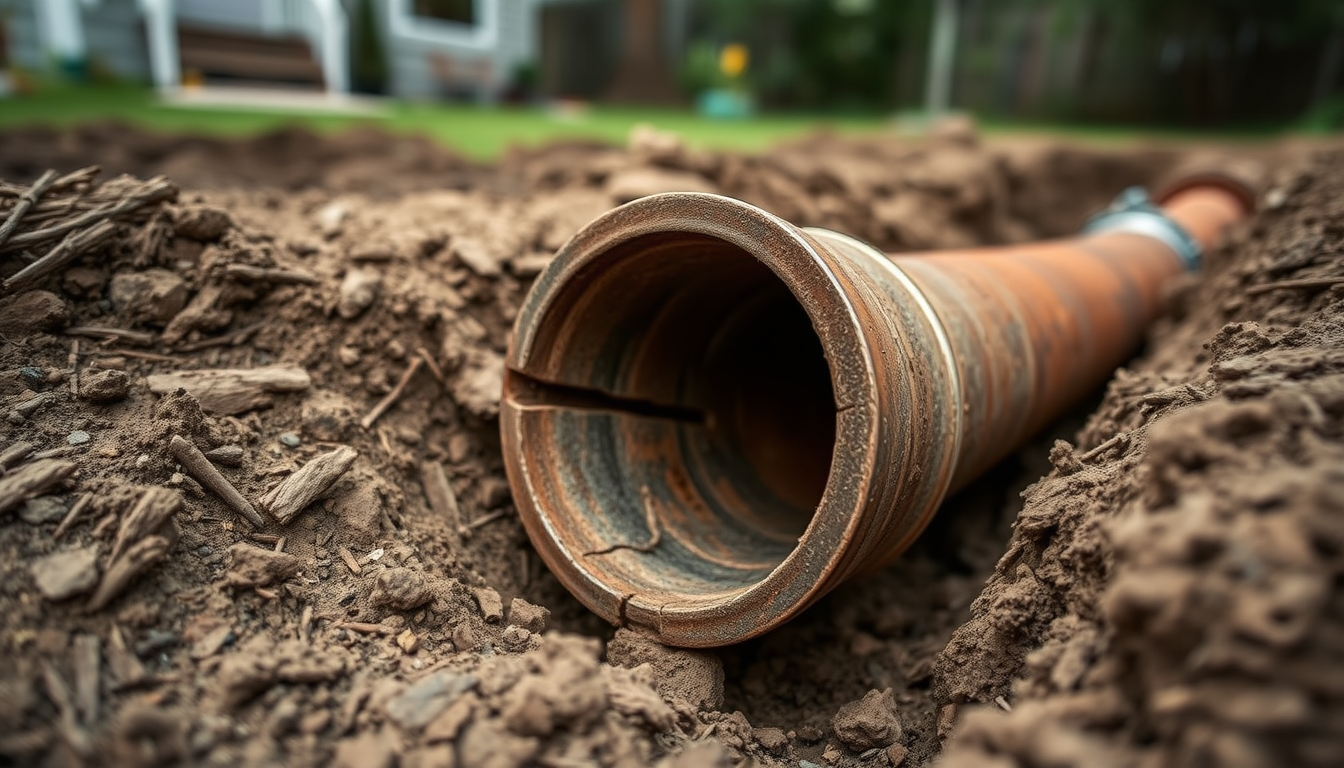
The clearest sewer line repair signs are several drains backing up at once, a sewage smell that won’t quit, gurgling toilets, and soggy or strangely green patches in the yard. One slow sink is usually a simple clog. When the whole house slows down or backs up together, the trouble has moved past the fixtures and into the main sewer lateral they all share. That’s the line between a quick cable job and a real repair. Here’s how a Sonoma County drain tech reads those signs, what the camera usually finds behind each one, and why trenchless sewer repair is often the smarter fix on our older local lines.
Key takeaways:
- One slow fixture is a clog. Several fixtures backing up together points at the main sewer lateral, and that usually means repair, not just cleaning.
- The loudest warning signs are multi-drain backups, persistent sewage odor, gurgling toilets, recurring backups in the same line, and wet or oddly lush spots in the yard.
- A camera inspection is what tells you whether the fix is a snake, a spot repair, or a full replacement. Guessing wastes money.
- Tree roots cause more than half of all sewer blockages, and older Sonoma County clay and cast iron laterals are exactly what roots love.
- Trenchless sewer repair fixes many failing lines without digging a trench across your yard, but only a camera can confirm your line qualifies.
What counts as a sewer line repair sign vs. a normal clog?
A sewer line repair sign is a symptom that points to the shared main lateral, not to one fixture. The fastest way to tell the two apart is to count how many fixtures are affected. A normal clog hits one fixture: a single slow bathroom sink, one stopped-up toilet, a tub that drains slow. A sewer line problem hits several at once, because they all drain into the same main lateral, and the blockage or break is in that shared pipe. So if your kitchen sink, a downstairs toilet, and the shower all act up in the same week, that’s not three clogs. That’s one sewer line telling you it needs help.
Here’s the simple test you can run before anyone shows up. Flush a toilet and listen. If the shower drain or a nearby floor drain gurgles, or the toilet water rises when the washing machine empties, water is hitting a blockage in the main line and looking for another way out. That gurgle is the sound of your sewer lateral, not your sink.
The 7 sewer line repair signs to watch for
The seven sewer line repair signs are multiple drains backing up at once, gurgling toilets, a persistent sewage smell, soggy or unusually green patches in the yard, the same line backing up over and over, slow drains throughout the house, and raw sewage rising into tubs or floor drains. These are the calls we get most, roughly in order of how serious they tend to be. Any one of them is worth a look. Two or more together, and you’re almost certainly past the DIY stage.
1. Multiple drains back up at the same time
This is the single most reliable sign. When two or more fixtures back up together, especially the lowest ones in the house, the blockage is in the shared main line, not in any one fixture’s branch. A bathtub that fills with dirty water when you flush is the classic example. One fixture is a clog. Several at once is a sewer line problem.
2. Gurgling toilets and drains
Gurgling means trapped air. When water can’t move past a partial blockage or a break, it pulls air through the nearest trap and you hear it bubble. It often shows up before a full backup does, which makes it an early warning. If your toilet gurgles every time the kitchen sink drains, those two are talking through a restricted main line.
3. A sewage smell that won’t go away
A sealed sewer system shouldn’t smell. Catch a steady sewage or rotten-egg odor inside the house, or outside along the path of your lateral, and a pipe or joint has likely cracked. A smell in the yard is a strong sign the line is leaking into the soil. This one rarely fixes itself, and it tends to get worse.
4. Soggy spots or unusually green grass in the yard
A broken sewer line leaks nutrient-rich water into the ground, so the grass right above it often grows greener and faster than everything around it. You might also find a patch that stays wet with no sprinkler nearby, or a slight dip in the soil. Walk the line between your house and the street. The ground sometimes shows the break before the drains do.
5. The same line backs up again and again
If you’re snaking the same drain every few months, you’re treating a symptom. A line that clogs once is a clog. A line that clogs on repeat usually has a real cause stuck in the pipe: roots at a joint, a belly holding water and debris, or a corroded section catching everything that passes. The repetition is the pipe telling you the fix hasn’t reached the actual problem.
6. Slow drains across the whole house
One slow drain is local. Slow drains everywhere, all at once, point to a restriction in the main lateral that serves the whole house. Water still gets through, so it’s easy to ignore, but it usually means roots, grease, or scale are narrowing the line and a full backup is coming. Catching it at the slow stage is a lot cheaper than catching it at the overflow stage.
7. Sewage coming up into tubs or floor drains
This is the emergency end of the list. When raw sewage rises into a tub, shower, or floor drain, the main line is blocked badly enough that waste has nowhere to go but back into the house. Stop running water and call a pro. This is a health hazard, not a wait-until-Monday problem, and it almost always means the lateral needs more than a cleaning.
Why older Sonoma County sewer lines fail
A lot of what we find comes down to two things: old pipe and big trees. Plenty of homes around Santa Rosa, Petaluma, Sebastopol, and the rest of Sonoma County were built before the 1970s, and their sewer laterals are clay tile or cast iron. Clay comes in short sections with a joint every few feet, and every joint is a door. Roots find the tiny seepage at those joints, work in, and grow into a mat that catches everything. The U.S. Forest Service reports that roots cause more than half of all sewer blockages (USDA Forest Service), and in older neighborhoods with mature trees, that’s exactly what the camera shows.
Cast iron has its own failure mode. It corrodes from the inside into a rough, scaly surface that snags debris and chokes the pipe diameter down over the years. We also see bellied lines, where a section has sagged so water and waste pool instead of flowing through, often after decades of ground movement in our clay-heavy soils. As a licensed Sonoma County contractor (CSLB #1065909), we run a camera inspection on these older laterals every week, and the pipe almost always tells a different story than the clog did. That camera is what separates “snake it and you’re fine” from “this line needs a repair.”
Why trenchless sewer repair is often the smarter fix
Trenchless sewer repair fixes a failing line without digging a long trench across your yard, driveway, or landscaping. Instead of excavating the whole run, a crew works through one or two small access points. There are two common methods. Cured-in-place pipe lining (CIPP) pulls a resin-saturated liner into the old pipe and hardens it into a new pipe within the old one. Pipe bursting pulls a new pipe through the path of the old one while breaking the old pipe outward. Both can restore a line that roots or corrosion have wrecked, often in a fraction of the disruption of a full dig.
Is trenchless always the answer? No, and anyone who says so is selling. A badly collapsed line, a severe belly that needs re-grading, or certain access situations can still call for traditional excavation. That’s the honest part. The only way to know which fix your line actually needs is to look inside it first with a camera, then match the method to the damage. If the camera shows a sound pipe with roots, sometimes a cleaning buys real time. If it shows a break, that’s sewer repair territory, and trenchless is often the least invasive way to get there.
What you can check yourself vs. when to call
You can do plenty of the diagnosing yourself, and we’d rather you knew the truth than booked a visit you don’t need. Run the gurgle test. Count how many fixtures are affected. Walk the yard along the line and look for wet or lush patches. For a single slow fixture, clearing the hair from a pop-up, plunging, or cleaning the P-trap under a sink is fair game. Skip the chemical drain openers though. They rarely clear a real blockage, they can damage older clay and cast iron, and they create a burn hazard for whoever opens the line next. For a single stubborn main-line clog, a professional drain cleaning or hydro jetting visit is often all it takes.
Here’s where to stop and call. If two or more fixtures back up together, if a toilet gurgles when you run another drain, if you smell sewage inside or in the yard, if sewage rises into a tub or floor drain, or if the same line keeps backing up no matter what you do, the problem is in the shared lateral or the pipe itself. If that sounds like your situation, Rock Solid Drains works throughout Sonoma County and Marin, and you can reach us at (707) 889-8191 to get it looked at with a camera and diagnosed properly. Buying an older home here? A sewer-scope inspection before you close is exactly how you avoid inheriting someone else’s broken lateral. You can read what local homeowners say about that approach on our reviews page.
Frequently Asked Questions
How do I know if it’s a clog or a sewer line problem?
Count the fixtures. A clog affects one drain. A sewer line problem affects several at once, because they share the main lateral where the real blockage or break sits. The quick test: flush a toilet and listen. If a nearby shower or floor drain gurgles, the trouble is in the main line, not the fixture.
Can a sewer line be repaired without digging up my yard?
Often, yes. Trenchless sewer repair fixes many failing lines through one or two small access points instead of a full trench. Cured-in-place lining hardens a new pipe inside the old one, and pipe bursting pulls a new pipe through the old path. Not every line qualifies, though. A badly collapsed pipe or a severe belly can still need excavation, which is why a camera inspection comes first.
What causes most sewer line damage in older Sonoma County homes?
Tree roots and aging pipe. Many local homes have clay or cast iron laterals with joints that roots invade. The U.S. Forest Service reports that roots cause more than half of all sewer blockages (USDA Forest Service). Cast iron also corrodes and narrows from the inside, and older lines can develop bellies that pool waste. A camera inspection shows which is happening in your line.
Is a sewage smell in the yard an emergency?
It’s an active leak that won’t fix itself, so treat it seriously. A steady sewage or rotten-egg odor outside usually means a cracked pipe or joint is releasing gas and wastewater into the soil. It tends to get worse and often pairs with soggy or unusually green patches above the line. Get a camera on the lateral before it becomes a backup inside the house.