For most older Sonoma County homes, yes, a sewer camera inspection is worth getting before you close. It’s the one check a standard home inspection leaves out, and it’s the difference between knowing what shape the sewer lateral is in and finding out the hard way a month after you get the keys. A sewer camera inspection, also called a sewer scope inspection, sends a waterproof camera down the line that runs from the house to the city main. You get to see roots, cracks, sags, and old failing pipe before they become your problem. Here’s when it pays off, what it actually finds, and the local rules around sewer laterals that catch a lot of buyers off guard.
Key takeaways:
- A standard home inspection does not include the underground sewer lateral. A sewer scope is a separate camera inspection you have to ask for.
- Older Sonoma County homes often have clay or cast iron laterals, and roots are reported to cause more than half of all sewer blockages (USDA Forest Service).
- The property owner owns the lateral from the building all the way to the city main, so a bad line is the new owner’s bill (Sonoma Water).
- In the Sonoma Valley County Sanitation District, laterals 30 years or older must be inspected and repaired if needed. Other local districts don’t require it (Sonoma Water).
- Catch a problem before closing and it’s a negotiation. Catch it after and it’s a surprise repair.
What is a sewer camera inspection?
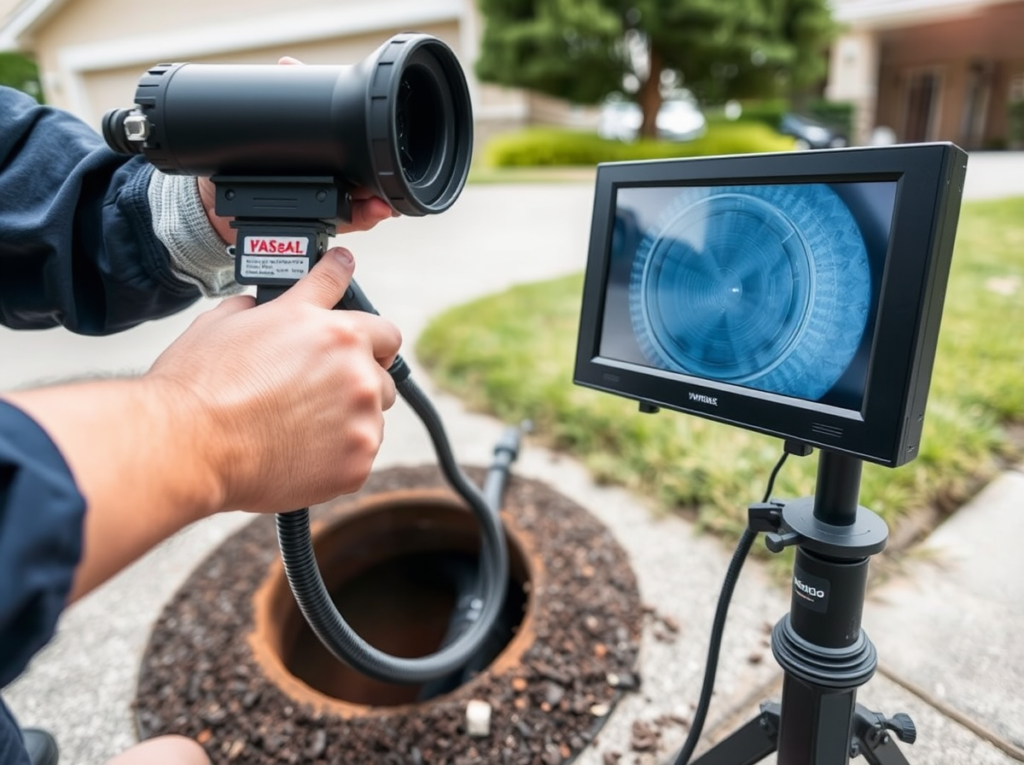
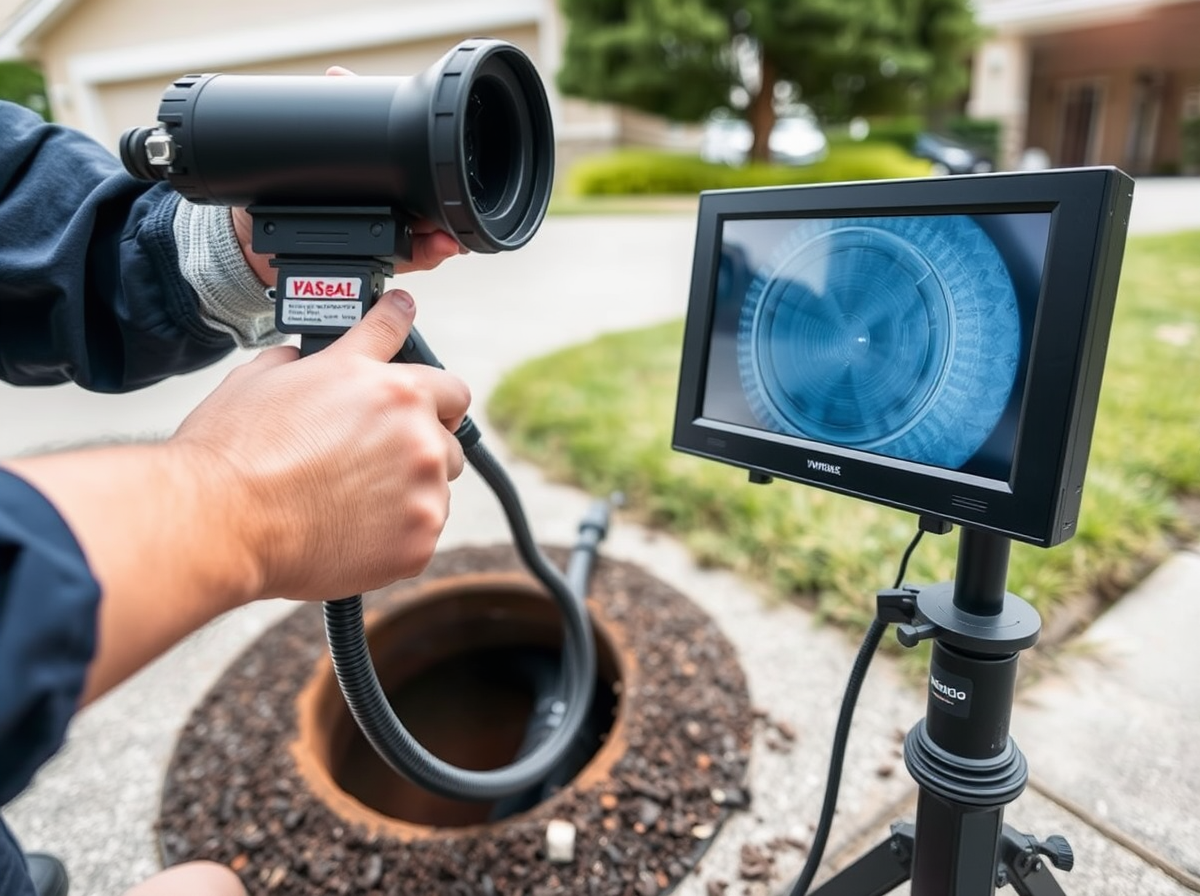
A sewer camera inspection is a real-time video look inside your sewer line. A technician feeds a waterproof camera on a flexible push rod into the cleanout, the access point for your main line, and drives it through the pipe all the way to where it ties into the city sewer or a septic tank. You watch the footage on a monitor as it goes. The camera head is self-leveling so the picture stays right side up, and a counter on the cable tells the tech how many feet down the line any problem sits.
The camera portion is quick, usually a few minutes of actual driving once the line is accessed. What you get out of it is the part that matters: a clear picture of the pipe material, the joints, and any roots, cracks, or standing water inside. That’s why a sewer camera inspection beats guessing. You’re not paying someone to predict what’s underground. You’re looking at it. The same tool also locates a problem from above ground, so if a repair is needed, the crew knows exactly where to dig instead of opening up the whole yard.
Why doesn’t a standard home inspection cover the sewer line?
Because a standard home inspection stops at what the inspector can see and reach, and the sewer lateral is buried. A general home inspection checks the visible plumbing: fixtures, supply lines, the water heater, drains under sinks. It does not send a camera into the underground pipe that carries waste from the house to the street. That line is out of sight, and it’s almost always excluded.
That gap matters because the sewer lateral is one of the most expensive things on a property to fix, and it’s invisible until it backs up. A buyer can get a clean home inspection report and still inherit a lateral full of roots or a section of pipe that’s cracked and sagging. A sewer scope inspection is the separate, optional step that closes that blind spot. If you’re buying an older home and nobody has mentioned the sewer, assume it hasn’t been looked at. Has anyone actually put a camera in that line, or is everyone just hoping it’s fine?
What does a sewer camera inspection find in an older Sonoma County home?
It finds the things that don’t show up anywhere else: root intrusion, cracks and breaks, bellies, offset joints, corrosion, and outdated pipe material. These are exactly the problems that build up quietly in an older lateral and then announce themselves at the worst possible time. Here are the ones we see most often on local lines.
Root intrusion
Roots are the number one culprit around here. They find the small gaps at pipe joints, push in chasing the water inside, and grow into a mat that snags everything you flush. A 2001 USDA Forest Service review reported that roots cause more than half of all sewer blockages (USDA Forest Service). Plenty of Santa Rosa, Petaluma, and Sebastopol neighborhoods pair older clay laterals with big mature trees, which is the exact combination roots love. The camera shows you whether roots are just starting or already established.
Cracks, breaks, and offset joints
Older pipe shifts. Ground movement, settling, and decades of use open hairline cracks, break sections outright, and pull joints out of alignment so one length of pipe steps down from the next. Each of those is a snag point that catches paper and grease, and each is a door roots use to get in. On camera, an offset joint is obvious. From the surface, you’d never know.
Bellies and standing water
A belly is a low spot where the pipe has sagged and no longer drains all the way. Waste pools in the dip, solids settle out, and the line clogs there again and again no matter how many times it’s cleared. The camera catches a belly because you’ll see standing water sitting in the pipe that should be flowing. Bellies usually mean a repair, not just a cleaning, so it’s the kind of thing you want to know about before you own it.
Outdated and corroded pipe material
What your lateral is made of tells you a lot about how much life it has left. According to figures from a Marin and Sonoma plumbing company, clay pipe tends to last around 50 to 60 years and cast iron around 75 to 100, while Orangeburg (a tar-and-paper pipe used mid-century) is known for warping and collapsing as it ages. If the camera shows Orangeburg or badly corroded cast iron, that’s a line living on borrowed time, and it’s good footing to have before you sign.
Who owns the sewer lateral, and what are the Sonoma County rules?
You do, once you buy. In Sonoma County, the property owner is responsible for the private sewer lateral from the building all the way to the point of connection with the sewer main, and the cost of repairing or replacing it falls on the owner (Sonoma Water). That’s the whole run, including the part under the street in many cases. So if that line fails, it isn’t the city’s problem. It’s yours.
Here’s the local wrinkle most national articles miss: the rules change depending on which district the home sits in. In the Sonoma Valley County Sanitation District, an ordinance requires owners of sewer laterals 30 years or older to have them inspected and repaired if defects are found. The district performs video inspections and smoke testing, and owners get one year from the report date to complete any necessary repairs (Sonoma Water). The Russian River County Sanitation District, by contrast, does not require point-of-sale lateral inspections or repairs (Sonoma Water). Two districts, two very different sets of expectations.
| District | Lateral inspection rule | What it means for a buyer |
|---|---|---|
| Sonoma Valley County Sanitation District | Laterals 30 years or older must be inspected and repaired if defects are found; one year to complete repairs | An inspection may be required, and a defect could come with a repair deadline you inherit |
| Russian River County Sanitation District | No point-of-sale inspection or repair requirement | No one is forcing a look, so a sewer scope is on you to order if you want to know |
In short: in Sonoma County the buyer inherits the entire sewer lateral from the house to the city main, and whether anyone is required to inspect it first depends on the sanitation district. The Sonoma Valley district mandates inspection of laterals 30 years or older; the Russian River district does not. The takeaway isn’t the specific ordinance. It’s that you should know which district a home is in, and what it expects, before you close.
When is a sewer camera inspection worth it before buying?
It’s worth it any time the lateral is old, the trees are big, or nobody can tell you the pipe’s history, which covers most older homes in the county. You can’t run this one yourself, since a sewer scope needs the camera and an accessible cleanout, but you can decide when it’s clearly the smart call. Get a sewer camera inspection if the home was built before the 1980s, if there are mature trees anywhere near the line, if the property is on a septic system, or if nobody can tell you what the lateral is made of or when it was last serviced. Those are the conditions where a hidden problem is most likely and most expensive. A scope before closing turns a future surprise into a negotiating point: you can ask the seller to repair it, credit you, or adjust the price with a real quote in hand.
When is it less critical? On a newer home with PVC or ABS pipe, no large trees, and a documented sewer history, the odds of a serious problem are lower, though a scope is still cheap insurance against a belly or a bad installation. The one home you shouldn’t skip is the one where it sounds like nobody actually knows what’s in the ground. That’s the line that needs the camera most. Clearing roots is the cheaper path while you weigh a repair, too: the Forest Service notes root removal can run about one-sixth the cost of replacing the pipe (USDA Forest Service).
If you’re buying an older home in Sonoma County or Marin and want the lateral looked at before you close, that’s exactly the kind of call we take all day. Rock Solid Drains is a licensed local contractor (CSLB #1065909), and you can reach us at (707) 889-8191 to get a camera in the line and a straight answer on whether it needs a cleaning or a real sewer repair. You can see what local homeowners say on our reviews page.
Frequently Asked Questions
Is a sewer inspection included in a regular home inspection?
No. A standard home inspection checks the visible plumbing inside the house but does not send a camera into the underground sewer lateral. A sewer scope inspection is a separate service you have to request, usually during the inspection or contingency period, before you close. If no one has scoped the line, assume it hasn’t been looked at.
How long does a sewer camera inspection take?
The camera work itself is quick, often just several minutes of driving the line once the cleanout is accessed. The whole visit, including setup, reviewing the footage with you, and locating any problem spot from the surface, is typically well under an hour. You watch it live, so you see whatever the camera sees in real time.
What does a sewer camera inspection find?
Root intrusion, cracks and breaks, bellies (sags where water pools), offset or misaligned joints, grease and scale buildup, corrosion, and outdated pipe material like Orangeburg, clay, or old cast iron. It also confirms what the lateral is made of and how much life it likely has left. Roots alone are reported to cause more than half of all sewer blockages (USDA Forest Service).
Do I need a sewer scope on a newer home?
It’s less urgent but still useful. A newer home with PVC or ABS pipe, no large trees, and a known sewer history is lower risk. A scope can still catch a belly or a sloppy installation that a builder left behind. On any home built before the 1980s, or any property with mature trees nearby, a sewer camera inspection is the smarter call.
Who pays for the sewer line if it’s bad?
Whoever owns the home. In Sonoma County, the property owner is responsible for the lateral from the building to the connection with the city main, including the repair or replacement cost (Sonoma Water). That’s why scoping before you close matters. Find a problem first and you can ask the seller to fix it or credit you. Find it after and the bill is yours.